
Non-invasive brain neuromodulation
Transcranial Direct Current Stimulation (TDCS)
TDCS is a non-invasive and painless neuromodulation technique that applies a very low-intensity direct current to specific scalp areas to modulate brain activity. It helps adjust cortical excitability — increasing or decreasing it as needed — to improve pain processing, motor control and cognitive-emotional balance. The procedure is quick, precise and well tolerated.
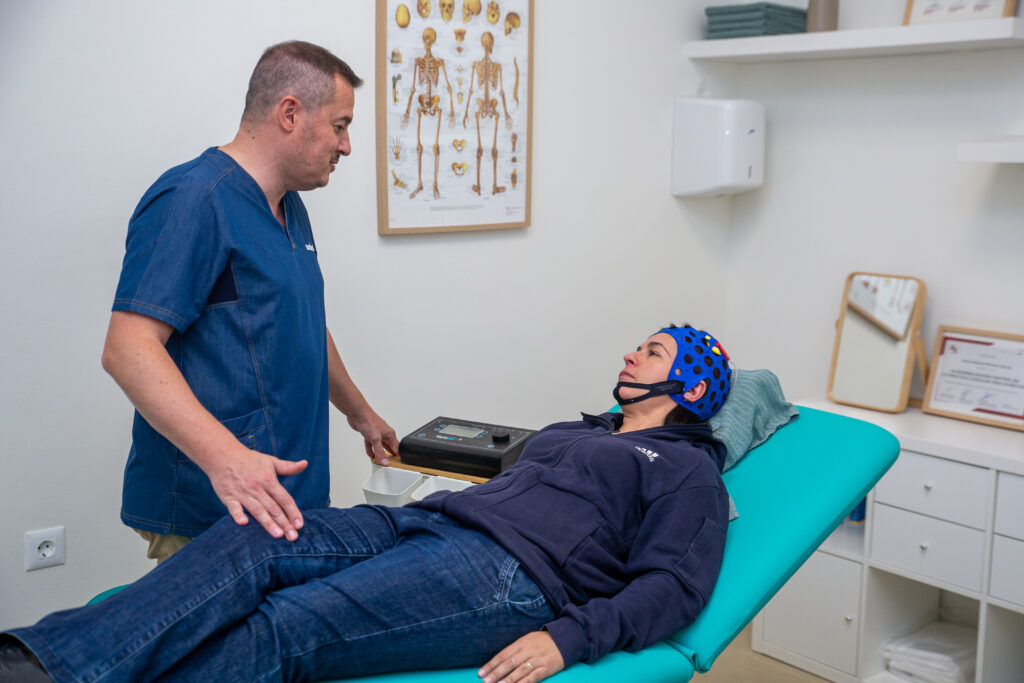
What it is and how it works
We place soft electrodes on specific scalp regions according to the cortical areas we want to influence. A gentle galvanic current flows for about 20–30 minutes, shifting the membrane potential of cortical neurons. Depending on polarity, stimulation can increase (anodal) or decrease (cathodal) excitability.
tDCS promotes neuroplasticity — the brain’s ability to reorganise and form new connections — and often enhances the effect of physiotherapy, percutaneous techniques and therapeutic exercise performed in the same plan.
Parameters (electrode montage, intensity and duration) are based on scientific evidence and tailored to your presentation. The technique is non-invasive, painless and allows you to relax during the session.
Good to know: You may feel a light tingling or warmth under the electrodes during the first seconds — it fades quickly and is normal.
Therapeutic effects
Pain modulation
Motor function
Neuroplasticity boost
Clinical indications
Chronic pain
Neurological rehab
Neurocognitive & mood
Safety & contraindications
tDCS is very safe when used by trained professionals. Possible minor effects include slight itching or redness under the electrodes — they resolve quickly.
We avoid or adapt in cases such as uncontrolled epilepsy, metal implants in the head, open scalp wounds, implanted electronic devices, pregnancy (as precaution), or when you prefer a non-stimulation approach. We assess every case individually.
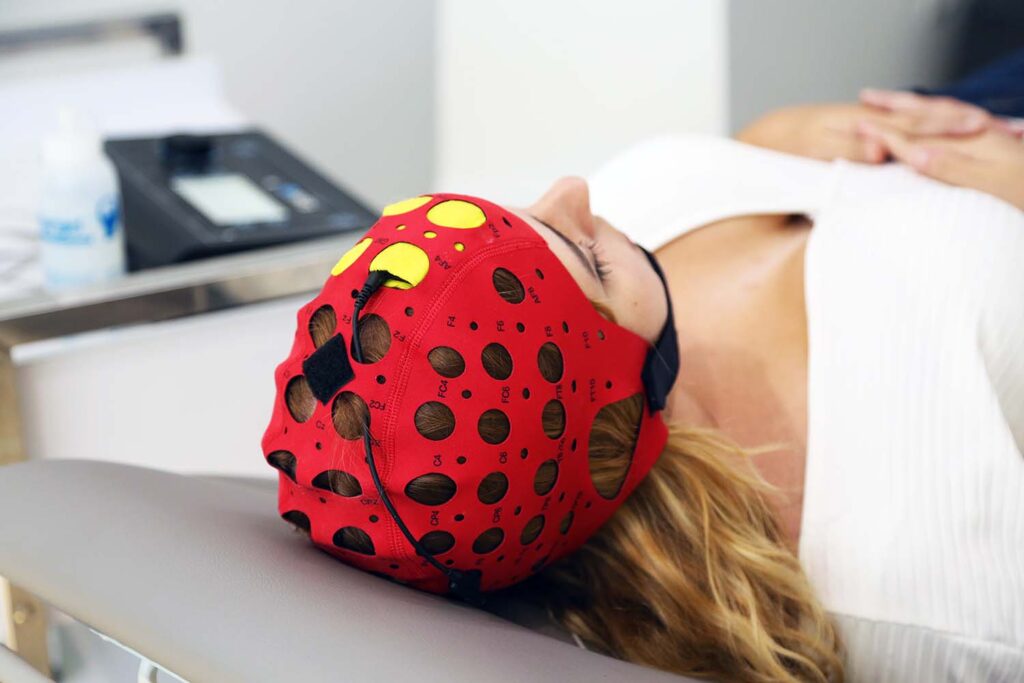
What a session looks like
TDCS — FAQs
Answers to common questions about non-invasive transcranial direct current stimulation at Weheal.